Wisconsin Ranks High in Motorcycles — But Lower in Motorcycle Fatalities
Wisconsin is motorcycle country. From weekend rides through the Kettle Moraine to long stretches of open highway, motorcycles are a familiar sight on Wisconsin roads. The state has a large population of registered motorcycles and a strong riding culture.
Motorcycling has long been part of Wisconsin’s identity. Thousands of riders take advantage of Wisconsin’s scenic roads each year, and motorcycles represent a meaningful portion of the vehicles registered in the state.
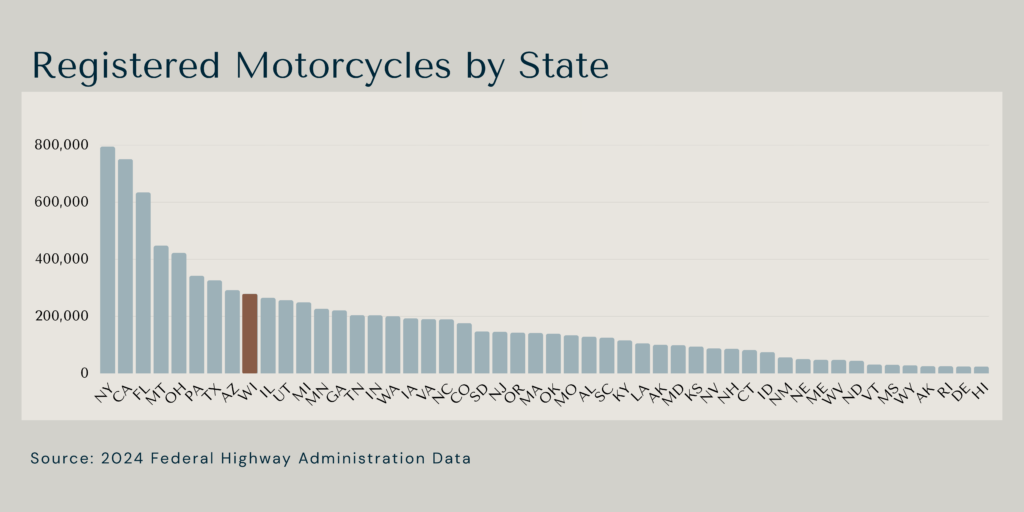
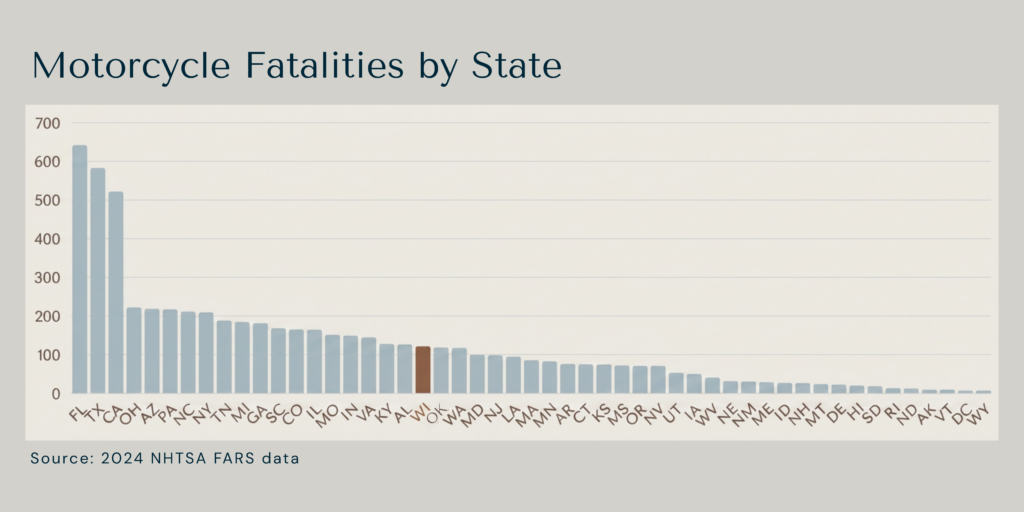
Given the number of motorcycles on Wisconsin roads, you might expect them to account for an equally large share of traffic crashes. They don’t. Data from the Federal Highway Administration show that while Wisconsin ranks 9th in US registered motorcycles, it ranks much lower (20th) in motocycle fatalities, making it one of the safer states for US riders.
The real story isn’t the number of motorcycle accidents. It’s what happens after they happen.
Motorcycles account for a relatively small percentage of Wisconsin’s total reported traffic crashes. On its face, that’s encouraging. It also challenges a common that motorcyclists are inherently more likely to cause accidents simply because they ride motorcycles.
The more important concern appears when we look beyond the number of crashes and consider their severity.
Motorcycle Crashes Can Have Disproportionately Serious Consequences
Motorcycles and passenger vehicles offer dramatically different levels of physical protection.
Someone involved in a car accident is surrounded by a vehicle designed with crumple zones, airbags, seat belts and other safety systems. A motorcycle rider has none of those protections.
When a motorcyclist is struck by a car, truck or SUV, the rider may experience both the initial impact with the vehicle and a second impact with the roadway or another object.
That can result in serious injuries including:
- Traumatic brain injuries
- Spinal cord injuries
- Broken and fractured bones
- Road rash and severe skin injuries
- Internal injuries
- Neck and back injuries
- Amputations
- Permanent disability
Motorcycle crashes can also be fatal at a rate far out of proportion to their overall share of traffic accidents.
That is why looking only at the total number of Wisconsin motorcycle crashes doesn’t tell the entire story.
Why Do Motorcycle Accidents Happen?
There is no single cause of motorcycle accidents. Rider behavior can certainly contribute to some crashes, just as driver behavior contributes to crashes involving passenger vehicles. But many motorcycle accidents happen because another driver simply fails to see the motorcycle or recognize its right of way.
Common causes include:
Drivers Turning Left in Front of Motorcycles
Intersections can be particularly dangerous for riders. A driver may see an approaching motorcycle but misjudge its speed or distance and turn left across its path. With little time or space to react, the motorcyclist may be unable to avoid the collision.
Failure to Yield
Drivers entering a roadway, leaving a driveway or moving through an intersection may fail to yield to an approaching motorcycle. Because motorcycles have a smaller visual profile than cars and trucks, drivers need to make a conscious effort to look for them.
Unsafe Lane Changes and Blind Spots
A motorcycle can disappear into a vehicle’s blind spot much more easily than another car. Drivers who change lanes without thoroughly checking their mirrors and blind spots can move directly into the path of a rider.
Distracted Driving
Looking at a phone, adjusting navigation or simply failing to pay attention can have serious consequences for anyone on the road. For a motorcyclist, even a momentary lapse by another driver can be devastating.
Speed and Impaired Driving
Excessive speed and alcohol or drug impairment can increase both the likelihood of a motorcycle accident and the severity of the resulting injuries, whether the impaired or speeding person is the rider or another driver.
Motorcycle Safety is a Shared Responsibility
Motorcyclists can reduce their risk by riding defensively, wearing appropriate protective gear, maintaining their motorcycles and never riding while impaired.
Drivers have an equally important role. Looking twice before turning or entering an intersection, checking blind spots carefully before changing lanes and leaving adequate following distance can help prevent collisions with motorcycles.
Most importantly, drivers need to remember that motorcycles have the same right to use Wisconsin roads as any other vehicle. A rider shouldn’t have to assume that another driver won’t see them.
What Should You Do After a Motorcycle Accident in Wisconsin?
The period immediately following a motorcycle accident can be overwhelming, particularly when serious injuries are involved.
If possible, seek medical attention promptly. Some injuries may not be immediately apparent, and medical documentation can also become important if you later pursue a personal injury claim.
The crash should also be reported to law enforcement when required. Photographs of the scene, vehicle damage and surrounding roadway conditions can be valuable evidence, as can contact information from witnesses.
Hire an Experienced Attorney After a Motorcycle Accident
If you aren’t sure what to do if you’ve been involved in a motorcycle accident, an attorney can evaluate the extent of your situation and help decide how to move forward with your case. At MacGillis Law Group, our personal injury lawyers are devoted to helping victims get the compensation they deserve. Call us to discuss your case. Let us protect you.